

The question of whether the United States will join Israel in striking Iran remains unresolved, and President Donald Trump is doing little to clarify the situation. Speaking to reporters on the White House South Lawn, Trump openly entertained both possibilities joining or not joining the conflict and added, “Nobody knows what I’m going to do”. His ambiguous statements have only deepened confusion both domestically and internationally.
Divisions Within the MAGA Movement
The potential for U.S. military involvement has exposed growing rifts within Trump’s political base. For example, Sen. Ted Cruz (R-Texas) and conservative commentator Tucker Carlson engaged in a heated exchange, with Carlson criticizing Cruz for his lack of knowledge about Iran, further highlighting the divide between interventionist and isolationist factions within the Republican Party. Meanwhile, Defense Secretary Pete Hegseth declined to disclose whether he has been asked to present military options to Trump regarding potential strikes in the Middle East.
Iran’s Response and Threats
Iran’s Supreme Leader Ayatollah Ali Khamenei has publicly rejected Trump’s calls for “unconditional surrender,” dismissing them as “absurd rhetoric” and warning that any U.S. military intervention would result in “irreparable damage”. Khamenei’s warnings were broadcast nationwide, emphasizing Iran’s determination to resist both imposed war and peace. Meanwhile, Israel reported overnight strikes on a centrifuge production site and several weapons manufacturing facilities in Iran, underscoring the ongoing escalation.
Domestic Political Tensions
Within the United States, there is significant opposition to involvement in another Middle Eastern conflict. Rep. Thomas Massie (R-Ky.) is leading a bipartisan effort, joined by progressive Democrats, to limit Trump’s authority to enter the war with Iran. While some, like Sen. Lindsey Graham (R-S.C.), advocate for finishing the job by intervening, others, including Rep. Marjorie Taylor Greene (R-Ga.), are wary of U.S. involvement. Tulsi Gabbard, the Director of National Intelligence, has publicly stated that Iran is not currently working toward a nuclear weapon a position Trump has dismissed.
Trump’s Broader Agenda
Amidst the crisis, Trump has continued to criticize Federal Reserve Chair Jerome Powell, calling him “a stupid person” and even joking about appointing himself to the Fed. This reflects Trump’s broader tendency to publicly pressure institutions and officials, even as he faces critical decisions about war and peace.
Legal and Constitutional Questions
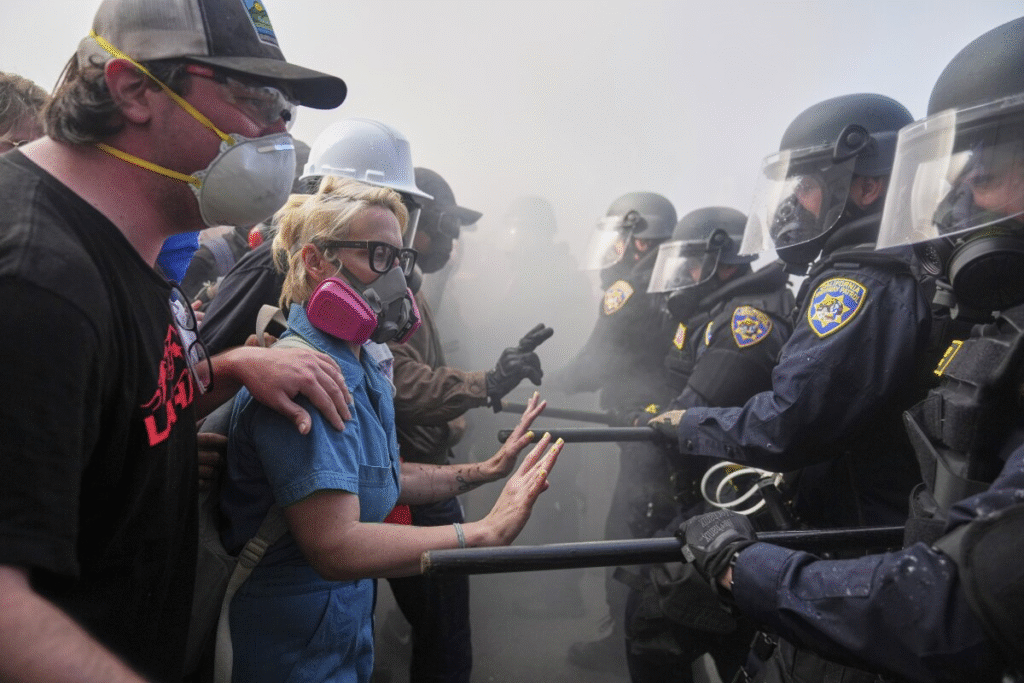
On the domestic legal front, a federal appeals court is considering Trump’s authority to deploy the California National Guard to quell protests, with the panel appearing sympathetic to the president’s broad emergency powers. This issue, while distinct from the Iran crisis, underscores the ongoing debate over executive authority and the balance of power in emergencies.
The path forward remains uncertain. Trump’s ambiguity, coupled with divisions in his party and warnings from Iran, make the situation volatile. The United States is at a crossroads, with significant internal opposition to war and a president who seems content to keep his options open and his intentions unclear
Images Copyrights: https://www.usnews.com/