
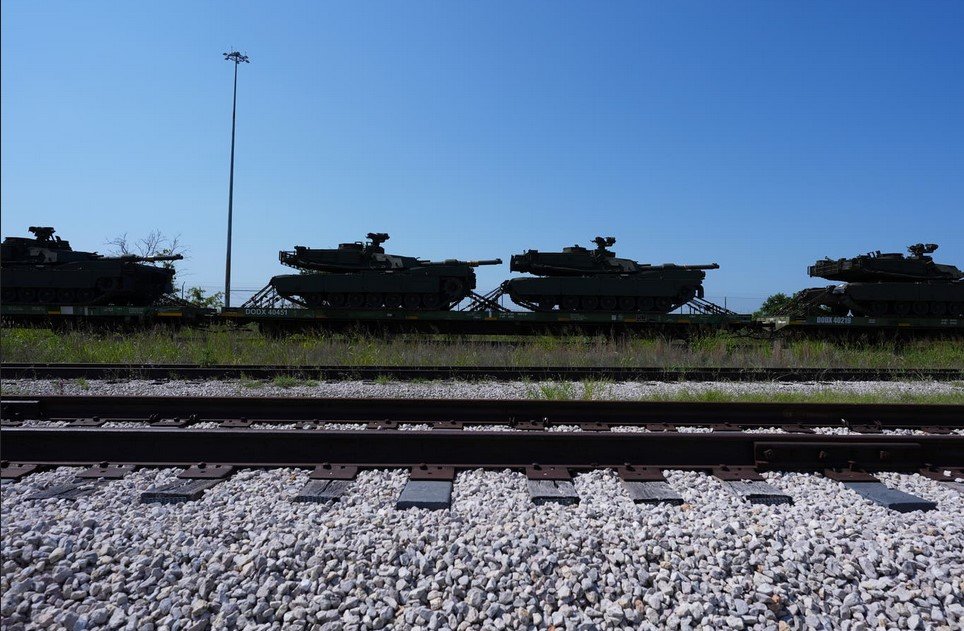

Washington, D.C On June 14, 2025, the nation’s capital witnessed its largest military parade in over three decades, as thousands of troops, dozens of tanks, and a fleet of aircraft marched and flew through the heart of the city. Ostensibly organized to celebrate the 250th anniversary of the U.S. Army and coinciding with President Donald Trump’s 79th birthday and Flag Day the event quickly became a flashpoint for national debate over the use of taxpayer funds, presidential symbolism, and the role of the military in American democracy
The Parade, Pomp and Pageantry
The parade kicked off at 6:30 p.m. on Constitution Avenue, drawing tens of thousands of spectators and featuring approximately 6,600 soldiers, 150 military vehicles (including at least 28 Abrams tanks), over 50 aircraft, 34 horses, two mules, and a dog named Doc Holliday. Troops from every Army division, the National Guard, Army Reserve, Special Operations Command, West Point, and ROTC participated, wearing uniforms representing every major conflict since the American Revolution
The procession began near the Lincoln Memorial and advanced along Constitution Avenue, concluding just beyond the White House. The Army Golden Knights parachute team performed a dramatic landing on the White House South Lawn, presenting Trump with a folded American flag—a gesture typically reserved for the families of fallen soldiers. The evening concluded with a fireworks display at 9:45 p.m.
The Controversy, Cost, Timing, and Symbolism
Despite the spectacle, the parade was mired in controversy. The estimated cost ranged from $25 million to $45 million, with up to $16 million earmarked for repairing damage to D.C. streets caused by heavy military vehicles. A recent AP-NORC poll found that 60% of Americans believed the parade was not a wise use of taxpayer money, even as some supporters saw it as a fitting tribute to the military’s service and sacrifice
Critics, including prominent Democrats, decried the event as a “wasteful, infrastructure-destroying display of jingoism” and an “alarming echo of authoritarianism,” drawing comparisons to military parades in Russia rather than democratic allies like France. The timing of the parade—amid ongoing civil unrest and a Trump-ordered National Guard deployment to quell protests in Los Angeles—further fueled accusations that the president was politicizing the military and using it as a personal prop
Public and Political Reaction
Reactions to the parade were sharply divided. Supporters, including veterans and military families, praised the event as a stirring moment of patriotism and a rare opportunity to honor the armed forces. “Every branch deserves recognition for their contributions; it simply uplifts morale,” said Carol Sue Quillen, a Trump supporter whose family has deep military ties
Opponents, however, saw the parade as a symbol of overreach and a misuse of public resources. “If I were in charge oh, I mean president I would put an end to the entire spectacle,” wrote one opinion columnist, arguing that the millions spent could have been better used to support veterans or reduce the national debt. The parade’s association with Trump’s birthday, despite official claims of coincidence, only deepened suspicions of self-aggrandizement
Security and Preparations
Security was tight throughout the city, with 18.5 miles of anti-scale fencing, 17 miles of concrete barriers, 175 magnetometers, and a heavy presence of federal, state, and local law enforcement. D.C. Mayor Muriel Bowser expressed concerns about potential damage to city streets but acknowledged the Army’s logistical expertise
A bizarre incident unfolded online when a fake Craigslist ad offered $1,000 in cryptocurrency for “seat-fillers” to boost crowd numbers, though the ad was quickly debunked as a joke.

Looking Ahead
While the parade served as the “opening event” for the year-long observance of America’s 250th anniversary in 2026, its legacy is likely to be defined by the debates it sparked over presidential power, military symbolism, and fiscal responsibility. As the nation prepares for its semiquincentennial, the question remains: Will future celebrations unite Americans, or will they further deepen the country’s divisions?
Image Copyrights https://www.independent.co.uk